

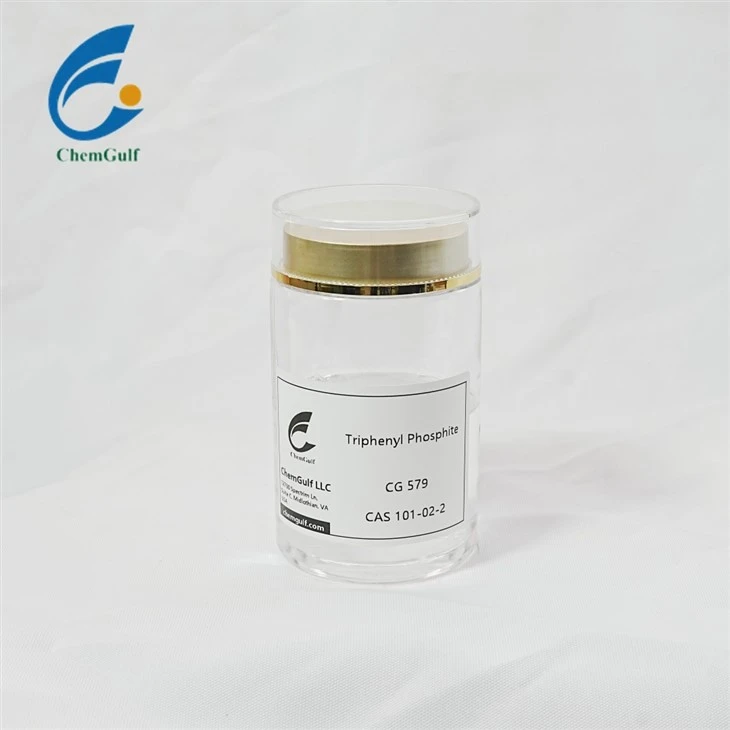
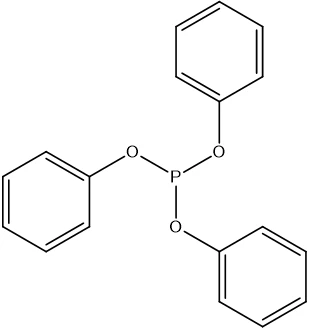
CG 579 Triphenyl Phosphite (TPP, CAS 101-02-0), a trivalent organophosphorus compound, acts primarily as a secondary antioxidant that reacts with hydroperoxides to prevent oxidative degradation during melt processing and thermal exposure in PVC, polyolefins, ABS, polyesters, lubricants, and organophosphorus synthesis.
Product Specifications
| Property | Specification | Typical Value |
|---|---|---|
| Product Code | CG 579 | - |
| Chemical Name | Triphenyl Phosphite | - |
| Abbreviation | TPP | - |
| Other Name | Phosphorous Acid Triphenyl Ester | - |
| CAS Number | 101-02-0 | - |
| EC Number | 202-908-4 | - |
| Molecular Formula | C18H15O3P | - |
| Molecular Weight | 310.28 g/mol | - |
| Chemical Class | Organophosphorus Compound | - |
| Functional Group | Phosphite Ester | - |
| Phosphorus Oxidation State | P(III) | - |
| Appearance (25°C) | Clear Liquid | Clear Liquid |
| Density (g/mL, 25°C) | 1.180–1.186 | 1.183 |
| Acid Value (mg KOH/g) | 0.2 Max. | 0.05 |
| Phosphorus Content (%) | 9.5–10.5 | 10.0 |
| Color (APHA) | 50 Max. | 10 |
| Freezing Point (°C) | 19–24 | 22 |
| Purity (%) | 98 Min. | 99.4 |
Secondary Antioxidant Mechanism
Hydroperoxide Decomposition
Acting as a peroxide decomposer (unlike primary antioxidants that terminate free radicals via hydrogen donation), the trivalent phosphorus center reacts directly with polymer hydroperoxides (ROOH), oxidizing from P(III) to stable P(V).
Reaction: ROOH + P(OPh)₃ → ROH + OP(OPh)₃ (converting reactive hydroperoxides into non-radical, stable alcohols and inert triphenyl phosphate, preventing chain scission/cross-linking).
Processing Stabilization
Consumes hydroperoxides to reduce oxidative stress during high-temperature and repeated melt processing.
Synergistic Stabilization
Combined with primary hindered phenolic antioxidants, it prevents premature consumption of the primary antioxidant, significantly improving long-term thermal stability and initial color retention during extrusion.
Polymer Application & Performance Matrix
PVC: Co-stabilizer and chelating agent; binds HCl and neutralizes metal chlorides to prevent thermal discoloration.
Polyolefins & Engineering Plastics (PE, PP, ABS, PC, PET/PBT): Secondary antioxidant; decomposes hydroperoxides, suppresses MFI fluctuations, and maintains clarity during processing.
Rubber & PS: Antioxidant component for thermal stability and color control.
Epoxy Resins & Adhesives: Reactive additive; reduces viscosity and prevents cure-cycle yellowing.
Lubricants & Coatings: Auxiliary antioxidant for oxidation control.
Synthesis & Catalysis: Intermediate for organophosphorus compounds; ligand in transition-metal catalysis.
Quality Parameters & Batch Control
Manufacturing & Batch Verification
Produced via controlled reaction of high-purity phenol with PCl₃, followed by high-vacuum distillation to strip impurities. Each lot is verified by GC (purity), potentiometric titration (acid value), and APHA colorimetry for consistent stabilization performance.
Documentation
Each shipment includes a batch-specific COA, TDS, and SDS for quality verification and full traceability.
Moisture Management, Storage & Processing Considerations
Moisture Control
Highly moisture-sensitive; hydrolysis raises acid value, corrosion, and reduces efficacy. Keep sealed, use dry equipment, and nitrogen-blanket bulk tanks.
Temperature
Freezing point 19–24°C; may crystallize below this. Use controlled warming to liquefy; avoid overheating.
Storage & Safety
Store in sealed drums indoors (cool, dry, ventilated), away from sunlight, moisture, oxidizers, and bases. Wear PPE (gloves, goggles).
Processing
Optimize dosage with primary antioxidants, considering processing temperature and residence time.
FAQ
Q: Why is it a secondary rather than a primary antioxidant?
A: It does not scavenge free radicals directly; instead, it reduces unstable polymer hydroperoxides into inert alcohols, protecting primary antioxidants and preventing thermal-oxidative degradation.
Q: Can it be used with phenolic antioxidants?
A: Yes. Phenolics control free-radical chain reactions, while TPP decomposes hydroperoxides, providing complementary stabilization.
Q: How does moisture affect it during storage?
A: Moisture causes hydrolysis, releasing free phenol and acidic compounds that raise acid value, cause equipment corrosion, and reduce performance. Keep containers tightly sealed.
Q: What is the difference between Triphenyl Phosphite and Triphenyl Phosphate?
A: TPP (CAS 101-02-0) is a P(III) phosphite ester (secondary antioxidant). Triphenyl Phosphate (CAS 115-86-6) is a P(V) phosphate ester with different properties. They are not interchangeable.
Q: What packaging is available?
A: Standard 235 kg drums and 1,134 kg IBC totes; other options negotiable.
Specification
|
Property |
Specification |
Typical Value |
|
Appearance, 25 °C |
Clear liquid |
Clear liquid |
|
Density, g / mL, 25 °C |
1.180 – 1.186 |
1.183 |
|
Acid Value, mg KOH/g |
0.2 Max |
0.05 |
|
Phosphorus content, % |
9.5 – 10.5 |
10.0 |
|
Color, APHA |
50 Max |
10 |
|
Freezing point, °C |
19 - 24 |
22 |
|
Purity, % |
98 Min |
99.4 |
Custom specification is available upon request.
Packaging
235 kg / drum, 518 lbs / drum
1,134 kg / Tote, 2,500 lbs / Tote
Other packaging sizes available upon request
Pricing information / quote
Please contact us for more information.
Availability and Lead Time
Availability and lead time are dependent on the quantity of orders. Please contact us for more information.
Applications
CG 579, Triphenyl phosphite, is useful for a variety of applications, which include, but are not limited to,
● Chemical intermediate
● Anti-oxidant and stabilizer in plastics
● Auxiliary anti-oxidant in lubricants and greases
● Catalyst adjuvant in polyolefins
● Catalytic ligand in transition metal catalysts
CG 579, Triphenyl phosphite, is widely used in many industries, which include, but are not limited to, Plastic and rubbers, lubricants and greases, adhesives, coatings, and pharmaceuticals, etc.
TDS / SDS
(A PDF available to download)
SDS, available upon request
Manufacturing Process
Triphenyl phosphite is typically manufactured by reacting phosphorus trichloride and phenol. The side product of the reaction is hydrochloride, a very strong inorganic acid.
Chemical Reactions
Triphenyl phosphite can be oxidized into triphenyl phosphate.
Triphenyl phosphite reacts with elemental sulfur at high temperatures to give triphenyl thiophosphate.
Triphenyl phosphite reacts with Grignard reagents to synthesize trialkyl phosphines.
Properties
|
Chemical Formula |
C18H15O3P |
|
Molecular Weight |
310.28 |
|
Appearance, 25 °C |
Colorless liquid |
|
Melting Point |
22 - 25 °C (72 – 77 °F) |
|
Initial boiling point |
360 °C (680 °F) |
|
Density, 25 °C, g/cm3 |
1.18 |
|
Solubility in Water, 25 °C |
Insoluble |
Spectra
NMR
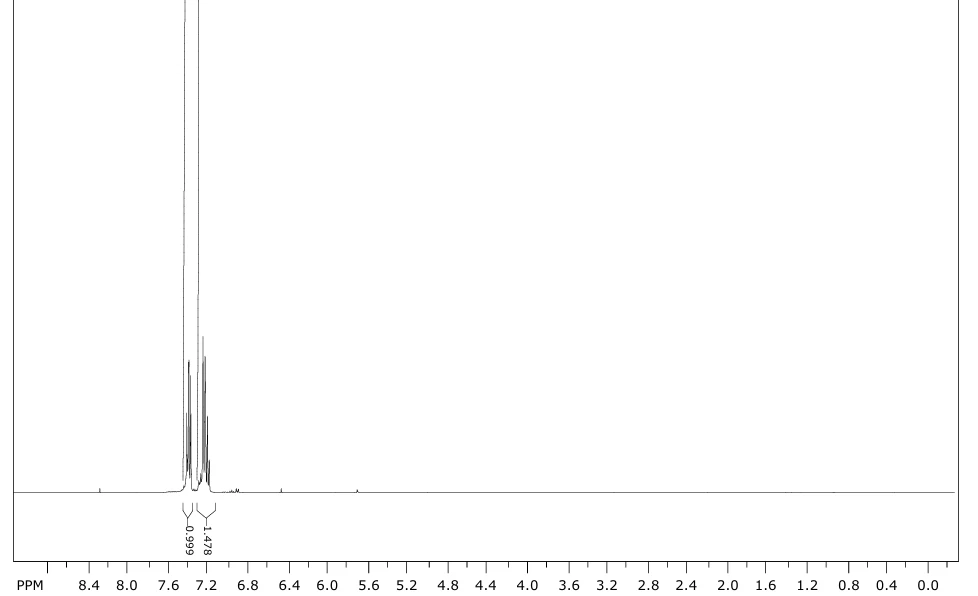
1H NMR of CG 579 Triphenyl phosphite
IR
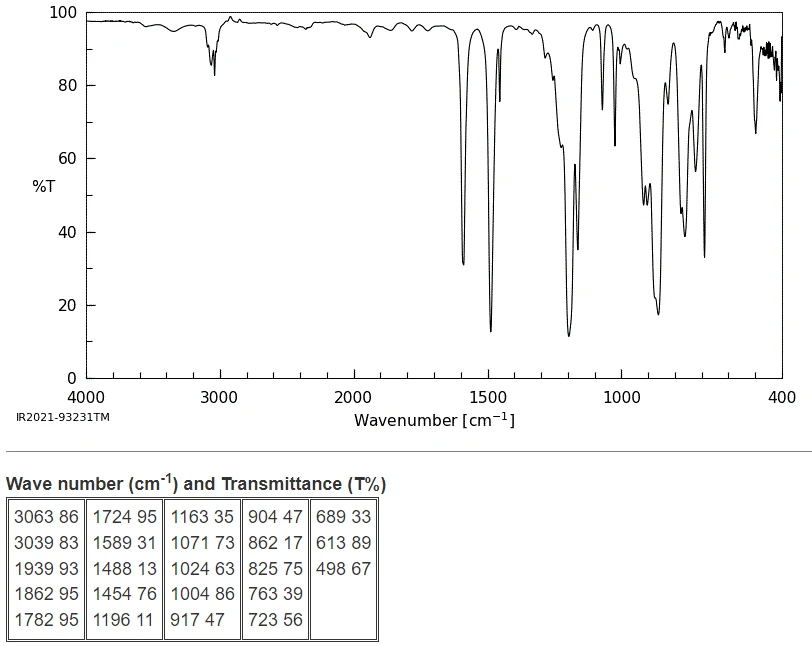
SDBS : https://sdbs.db.aist.go.jp/ , National Institute of Advanced Industrial Science and Technology, February, 3rd, 2025
Links
See more products at www.chemgulfllc.com
Hot Tags: cg 579 triphenyl phosphite, cas 101-02-0, China cg 579 triphenyl phosphite, cas 101-02-0 manufacturers


